

Executive Summary
During my tenure at Beko Egypt, I spearheaded a critical logistics optimization project aimed at resolving the lack of visibility regarding reusable transport containers (plastic and metal boxes). By identifying systemic risks—including potential stockouts, delayed supplier returns, and inaccurate planning data. I designed and implemented a hybrid tracking solution. This initiative integrated Power Apps for floor-level data entry, an Excel-based relational database for backend logic, and Power BI for executive-level analytics. The project successfully transitioned the warehouse from a reactive “blind” inventory state to a proactive, data-driven operational model.
Key Responsibilities & Core Systems
I managed the lifecycle of reusable assets across multiple categories, including Euro Boxes, Crisper Boxes, and specialized Metal Boxes. My role involved:
- Inventory Mapping: Categorizing diverse box types by dimensions, material (Plastic vs. Metal), and specific product compatibility.
- Stakeholder Coordination: Collaborating with production planners and warehouse staff to identify pain points in the current “manual” tracking loop.
- Supplier Management: Developing a framework to hold external partners accountable for the return of high-value transport assets.
Engineering Initiatives & System Optimization
To address the lack of a systematic tracking method, I conducted a Comparative Feasibility Study on three primary technical solutions:
- Quantity-Based Logging: Low complexity, but lacked specific traceability for lost items.
- RFID Tracking: High accuracy and automation potential, but deemed economically inefficient due to high initial CAPEX for low-cost plastic assets.
- Color Coding + Integrated Logging (Selected): The optimal balance of cost-effectiveness and operational utility. This method provided immediate visual cues for workers while maintaining a rigorous digital audit trail.
I implemented a phased rollout strategy, moving from data collection and “count-off” audits to system configuration and pilot testing, ensuring minimal disruption to daily production flows.
Automation & Data Infrastructure
I engineered a robust technical stack to automate the flow of information from the warehouse floor to the management office:
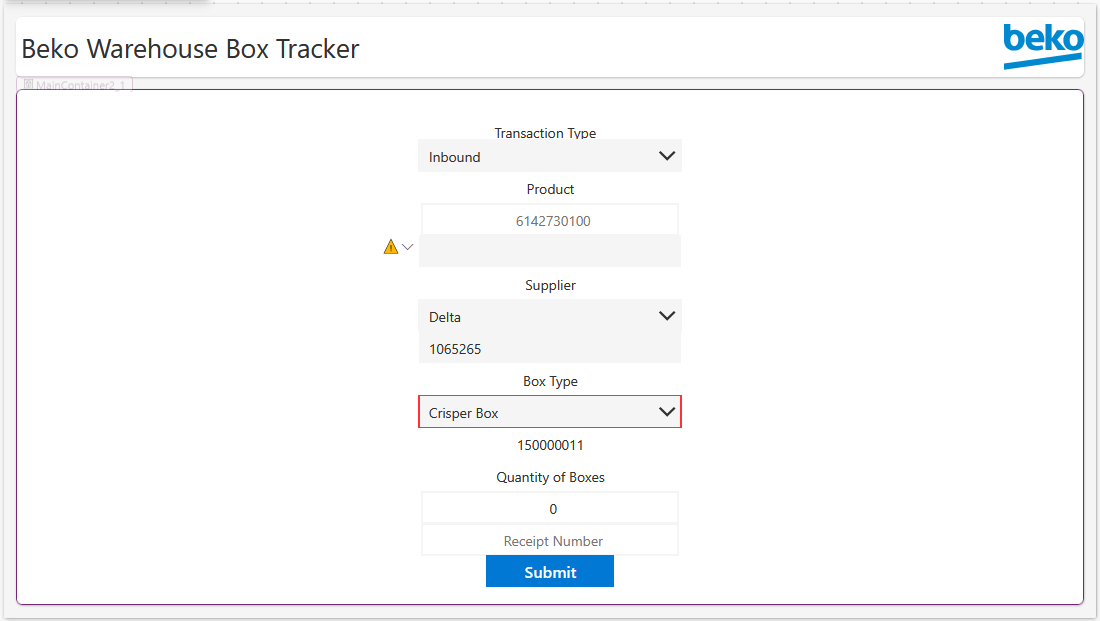
- Power Apps Interface: Developed a mobile-friendly form for warehouse operators to log “Inbound,” “Outed,” and “Empty” transactions. This minimized manual entry errors and provided real-time validation against Product SKUs.
- Relational Database: Built a structured backend to map SKU-to-Box relationships, ensuring that the correct container types were always matched with the corresponding products.
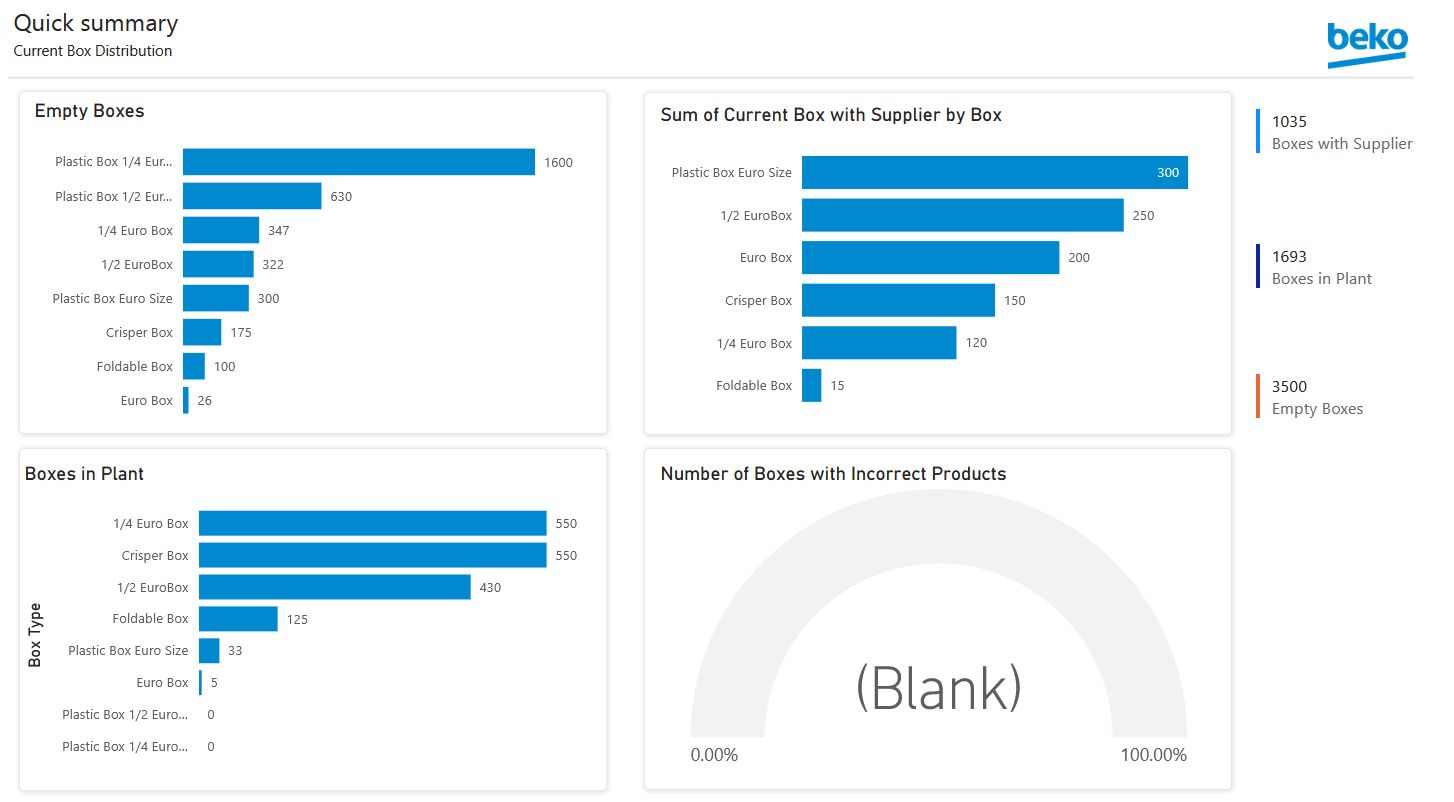
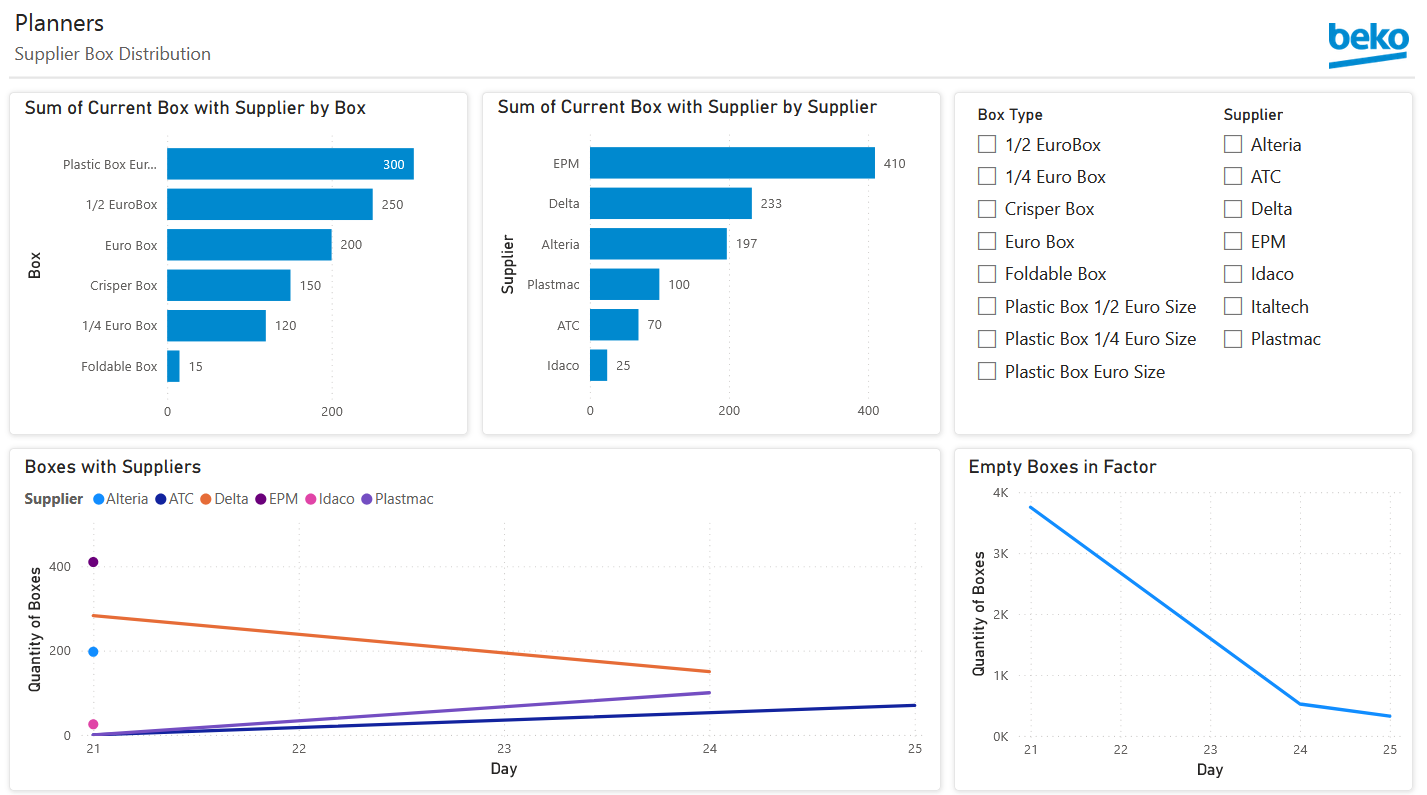
- Power BI Dashboard: Created a dynamic visualization suite providing real-time metrics on:
- Stock Availability: Instant visibility into “Empty” vs. “In-Plant” counts.
- Supplier Accountability: Tracking discrepancies between dispatched and returned units.
- Trend Analysis: Identifying bottlenecks in the box circulation cycle.
 🔍 Click to expand
 🔍 Click to expand
Quantified Impact & Operational Savings
The implementation of this system provided several key operational advantages:
- Reduced Lead Times: By providing planners with accurate “Empty Box” counts, the procurement of materials could be scheduled with higher precision.
- Enhanced Accountability: The “Supplier Quota” logic prevented over-allocation of assets to external partners, reducing the risk of lost inventory.
- Process Standardization: The integration of Power Apps provided a standardized “Single Source of Truth,” eliminating the need for manual tallying and reducing human error by an estimated significant margin during peak shifts.