
TL;DR
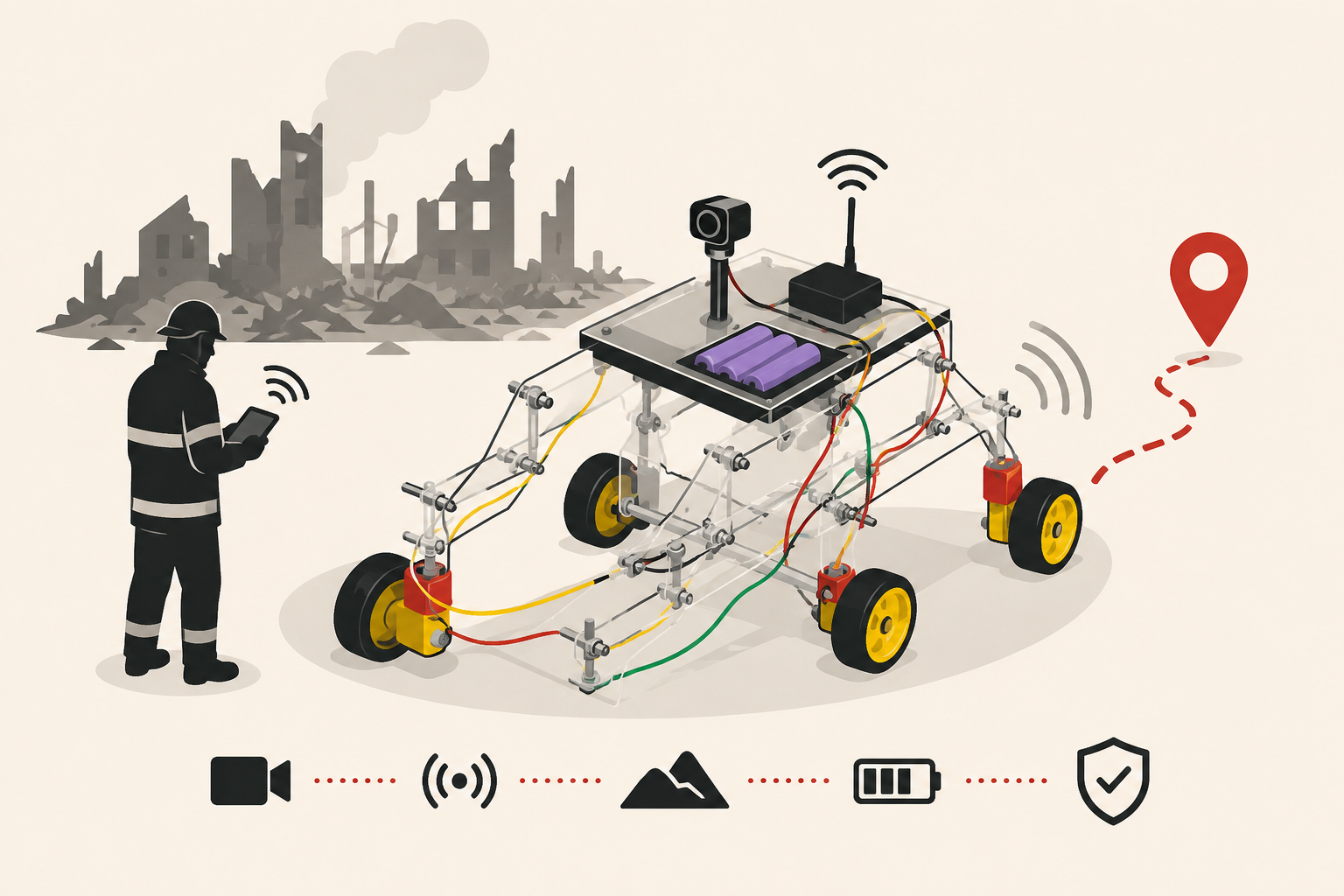
The Rescue Rover is a specialized robotic platform engineered for operation in high-risk environments, such as earthquake zones and collapsed structures, where human entry poses significant risks. By integrating a CRAB-II inspired suspension system, a multi-sensor array (Gas, Temperature, IR), and a heavy-duty mechanical chassis, the rover provides first responders with critical environmental telemetry while navigating terrain that is impassable for standard vehicles.
Problem
In the immediate aftermath of natural disasters like earthquakes or landslides, the “golden hour” is critical for survival. However, emergency responders frequently encounter significant obstacles:
- Unstable Terrain: Debris and collapsed structures create jagged, unpredictable paths.
- Hazardous Atmospheres: The leakage of flammable gases or extreme temperature fluctuations can endanger personnel.
- Limited Visibility: Remote sensing is often required to assess structural integrity before human teams enter a zone.
The primary engineering objective was to develop a rover capable of high-torque navigation, autonomous obstacle detection, and real-time telemetry transmission to bridge this gap between the disaster site and first responders.
Design Iterations
The development process followed an iterative engineering cycle, progressing from conceptual research to physical prototyping:
-
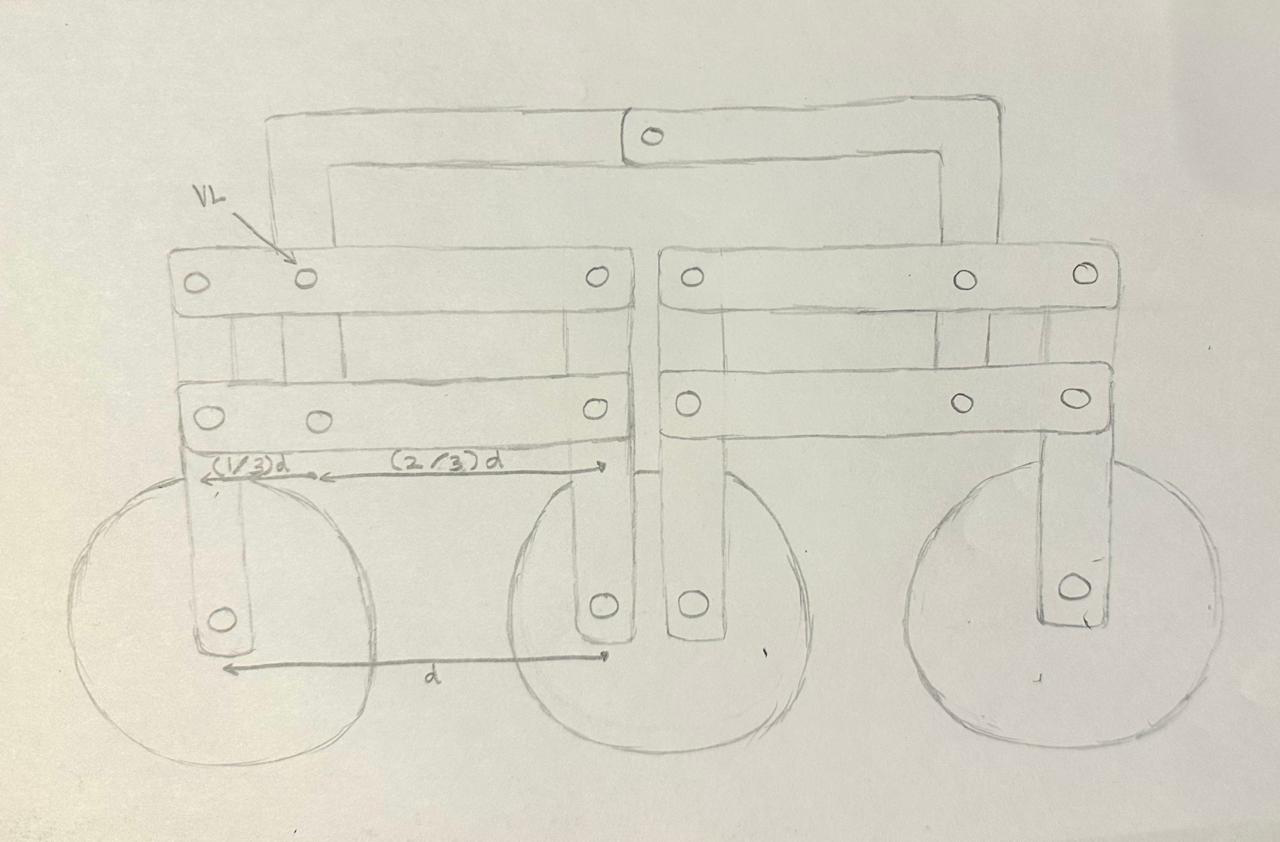
Locomotion Research: We evaluated various mobility systems (Wheeled, Tracked, and Legged). While tracks offer superior traction in loose soil, they were deemed less efficient for our specific power-to-weight requirements. Consequently, a six-wheeled design with a symmetric structure based on four parallel bogies was selected—inspired by the CRAB-II system—to ensure even load distribution across uneven surfaces.
-
Material & Structural Evolution: Initial prototypes utilized 2.5mm acrylic; however, these components failed under the mechanical stress of motor torque and hardware weight. We iterated to a 5mm thick acrylic frame, significantly increasing structural rigidity and durability.
-
Power Management: Preliminary testing with standard 9V batteries revealed insufficient current for simultaneous motor operation and sensor polling. We transitioned to a 3-cell Lithium-ion configuration, providing the necessary amperage to drive high-torque DC motors while powering the integrated sensor suite concurrently.
Technical Details
Mechanical Architecture
 🔍 Click to expand
 🔍 Click to expand
 🔍 Click to expand
 🔍 Click to expand
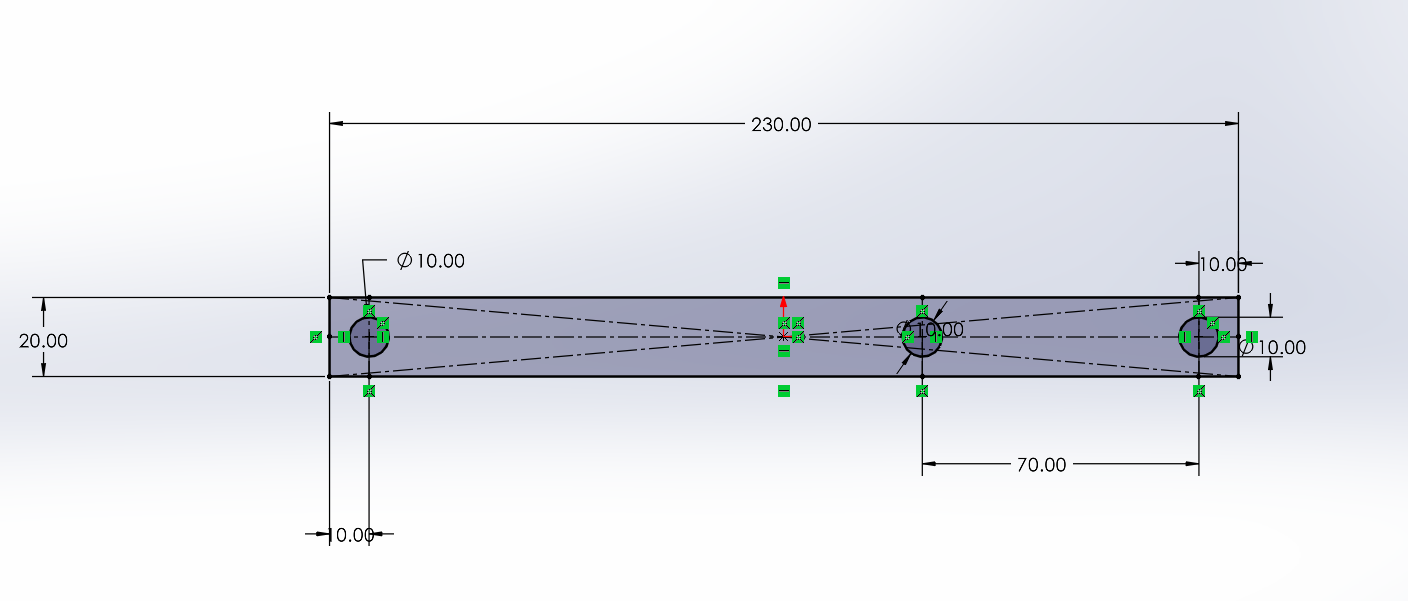
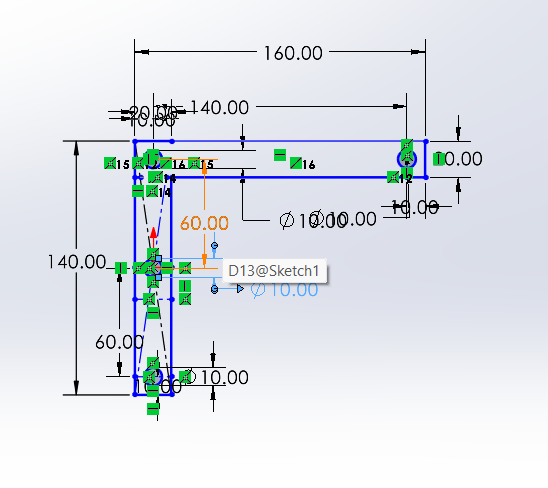
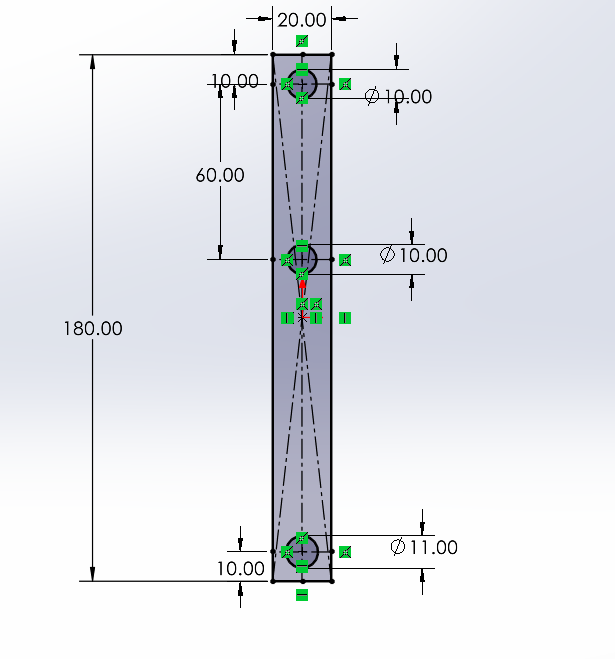
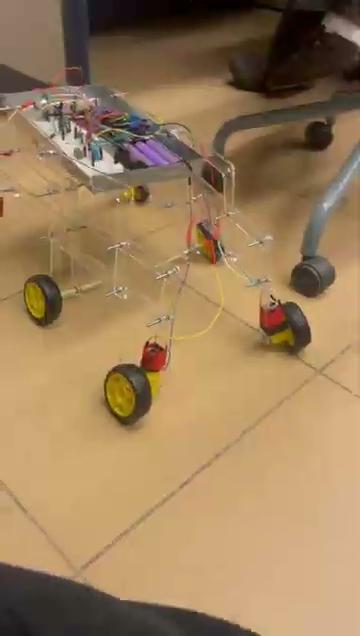
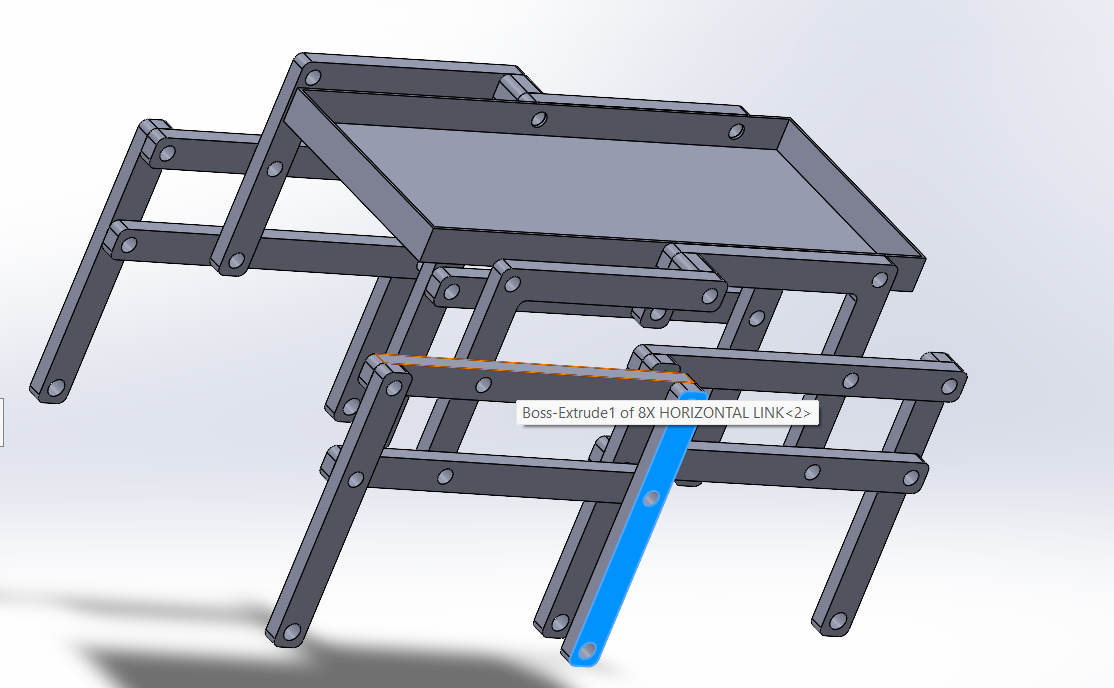
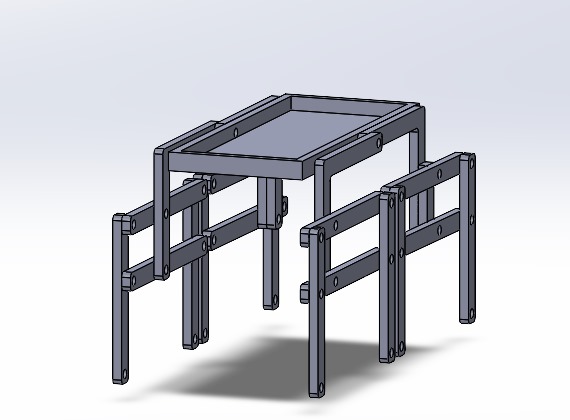
The chassis was engineered for both durability and modularity. Each “leg” of the rover functions as a sub-assembly consisting of horizontal, vertical, and L-shaped links joined by M10 bolts and nuts to ensure high-torque connections.
 🔍 Click to expand
 🔍 Click to expand
 🔍 Click to expand
 🔍 Click to expand
To facilitate navigation within confined spaces, we implemented a steering system (Ackerman or differential depending on iteration) to ensure precise maneuvering. The mechanical design prioritizes a high payload-to-mechanism ratio, allowing the rover to transport up to 10kg of additional equipment or specialized sensors.
Electronics & Sensor Fusion
The central processing unit for the platform is an Arduino Mega, selected over the Uno to accommodate the extensive I/O requirements of the L293D Motor Driver Shield and the multi-sensor array.
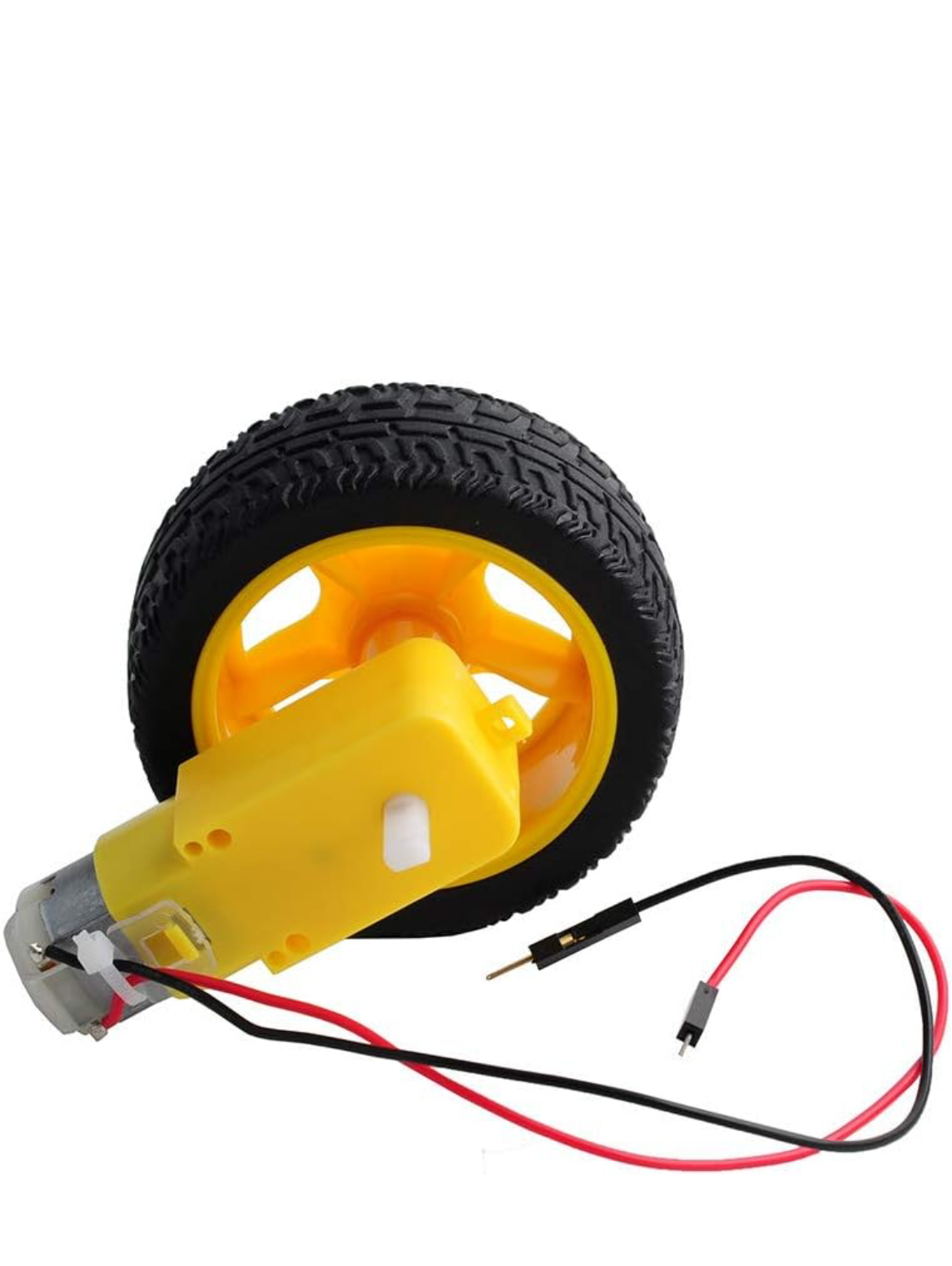
- Propulsion: We utilized Model 775 DC Motors for primary drive, providing the high torque necessary to overcome rolling resistance on heavy debris.
- Navigation: An IR sensor provides real-time obstacle detection, while a stepper motor manages precise steering adjustments.
- Environment Monitoring: The integrated suite includes a DHT-11 (Temperature/Humidity) and an MQ2 Gas Sensor to detect hazardous fumes such as LPG or methane.
Software Logic
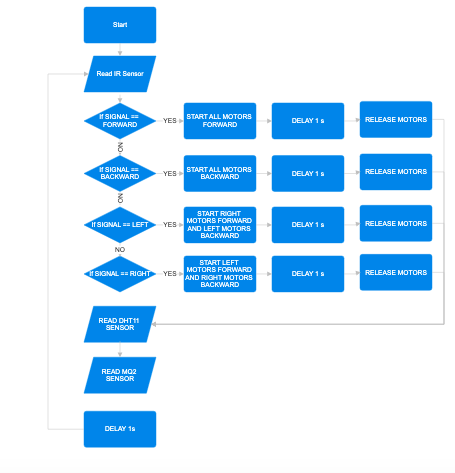
The system operates on a multi-threaded logic loop in C++. The firmware processes IR signals from a remote receiver to command motor states while concurrently polling the environmental sensor suite for real-time data telemetry.
Results & Key Metrics
The final prototype successfully met the following performance benchmarks:
- Durability: Successfully traversed 10cm high obstacles and “soft” barriers (simulated debris).
- Power Efficiency: Optimized motor speeds to 47% of maximum capacity, effectively balancing operational speed with battery longevity.
- Reliability: The transition to the Arduino Mega and Lithium-ion power source eliminated “brownout” issues encountered in early prototypes, ensuring stable sensor readings during high-torque maneuvers.