
TL;DR
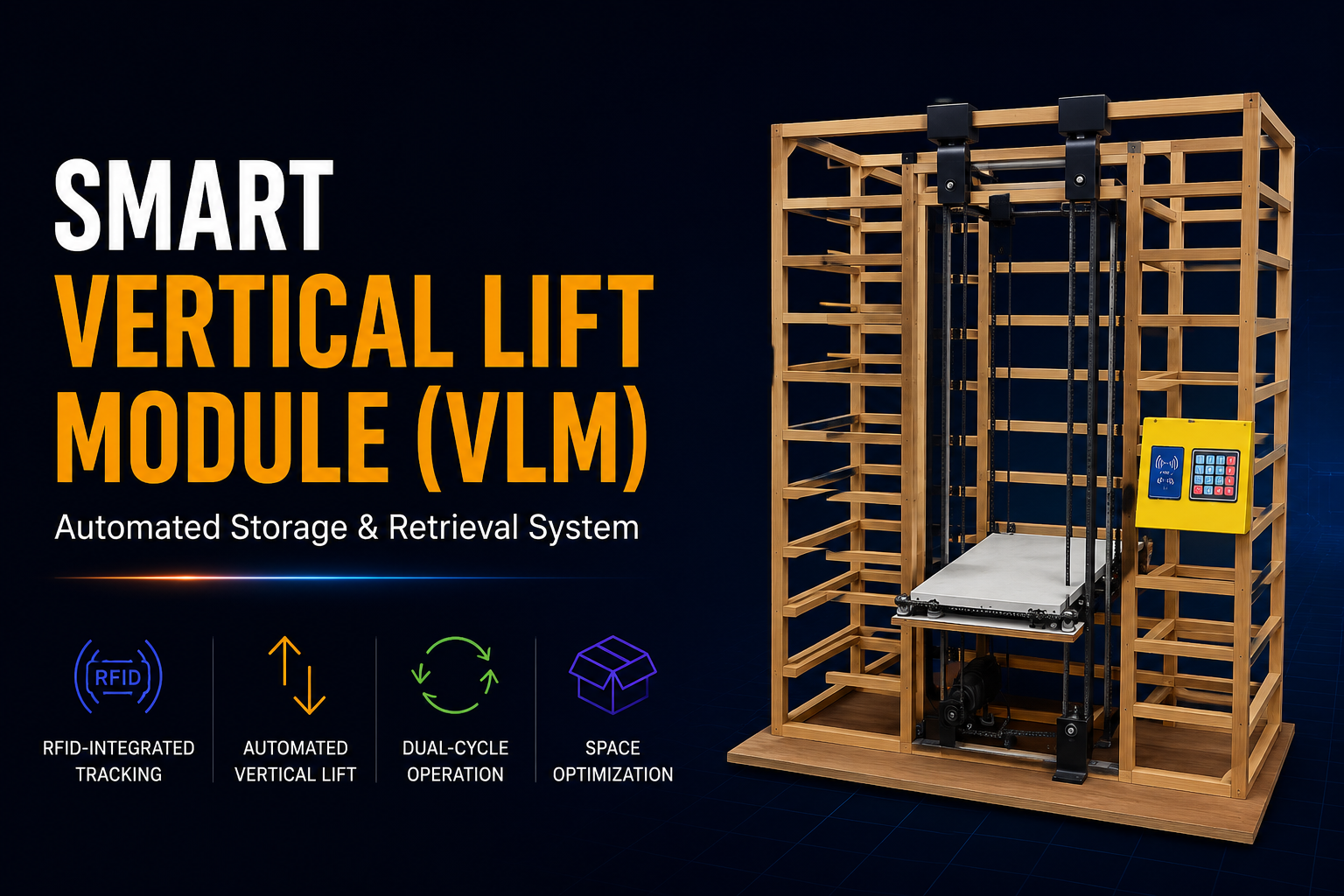
The Smart Vertical Lift Module (VLM) is an Automated Storage and Retrieval System (AS/RS) designed to optimize warehouse space utilization and streamline item handling. Featuring an RC522 RFID system for real-time item tracking and a dual-cycle mechanism with a buffer tray for simultaneous storage and retrieval, the system minimizes operational downtime. Driven by an ESP32 microcontroller and supported by a Flask/SQLite backend, the prototype combines robust 4-chain mechanical lifting with K-means machine learning algorithms to optimize shelf positioning.
The Bottleneck & Objectives
Traditional warehouse facilities often suffer from underutilized vertical volume and labor-intensive manual retrieval workflows. Standard operations encounter several operational constraints:
- Manual Inventory Logging: High susceptibility to human error during manual picking and logging operations.
- Space Inefficiency: Reliance on single-level floor storage, leaving high vertical space unused.
- Single-Cycle Downtime: Operational delays caused by separate, sequential retrieval and storage trips.
To solve these challenges, this project aimed to build a fully functional prototype capable of real-time item tracking, dual-cycle operation, dynamic shelf reordering via data clustering, and automated positioning.
Mechanical System Architecture
Drive System Selection
A weighted decision matrix evaluated belt, chain, and rack-and-pinion drive systems across load capacity, noise, maintenance, service life, and cost. While belt drives offer lower operational noise, a chain-driven system was selected due to its superior load-bearing capacity and long-term durability under heavy torque requirements.
4-Chain Synchronized Lift Assembly
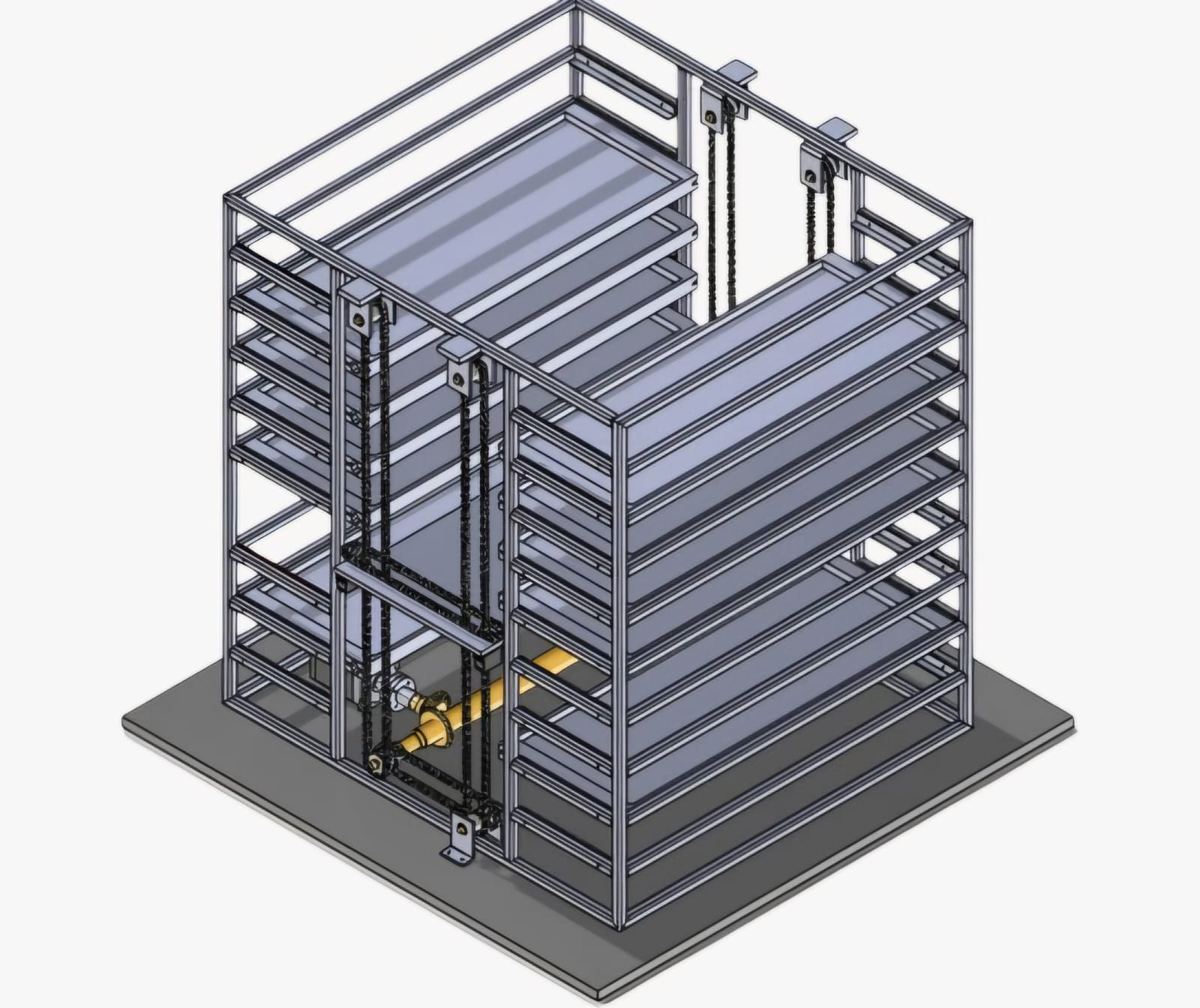
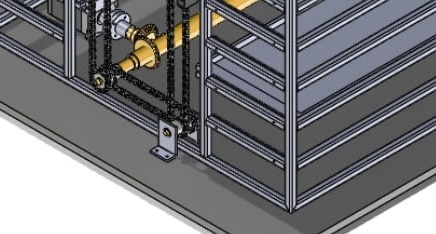
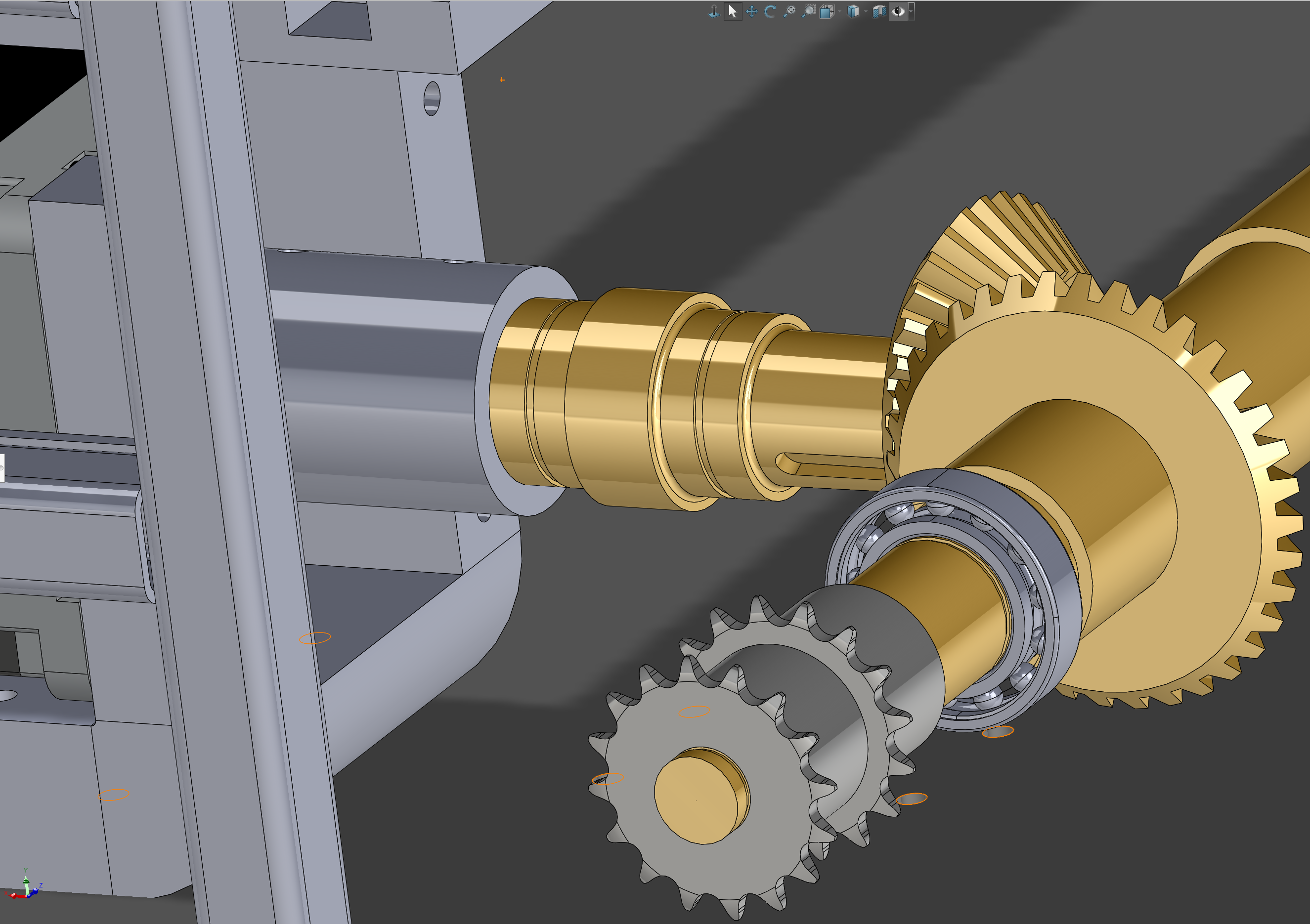
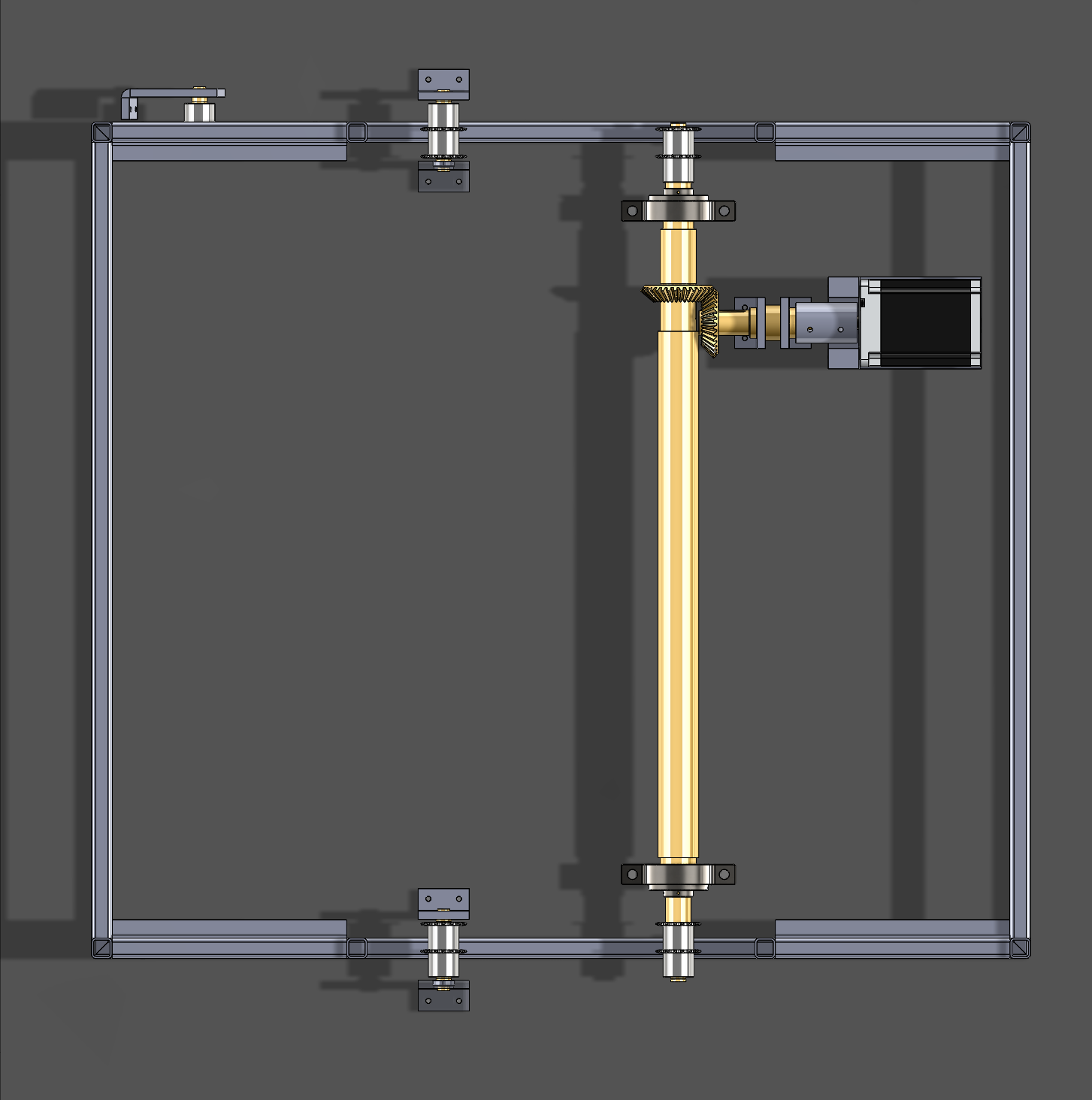
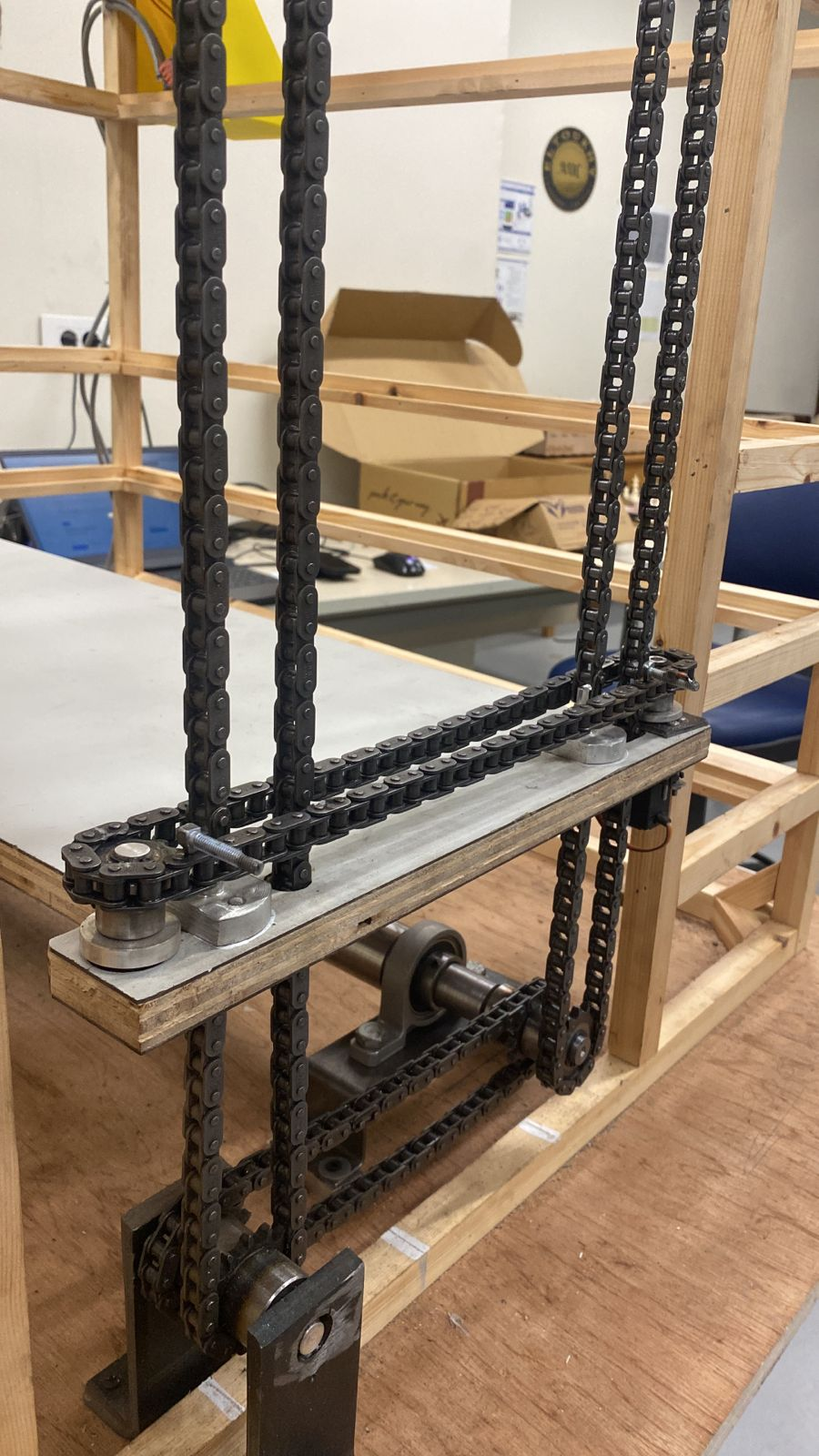
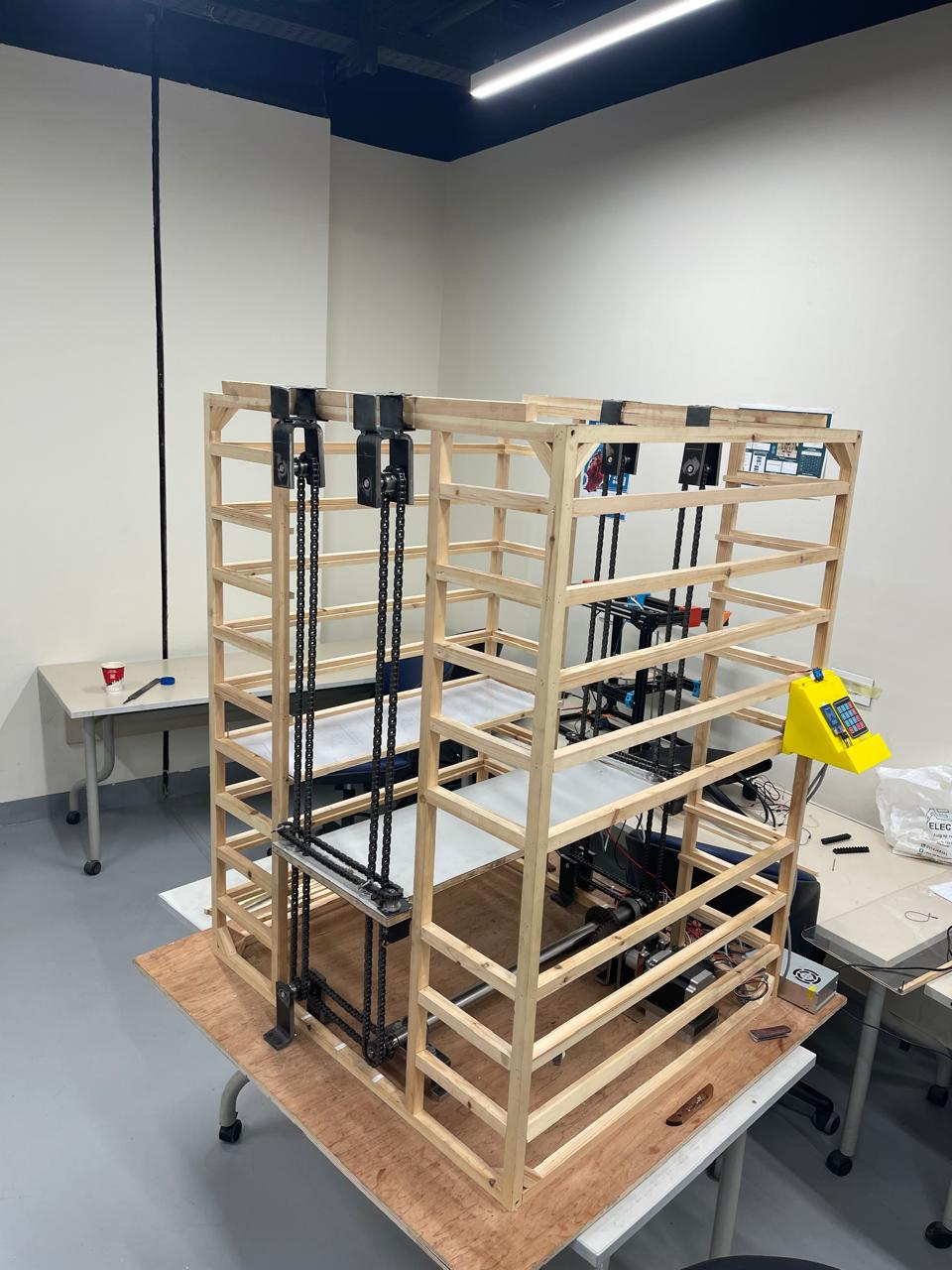
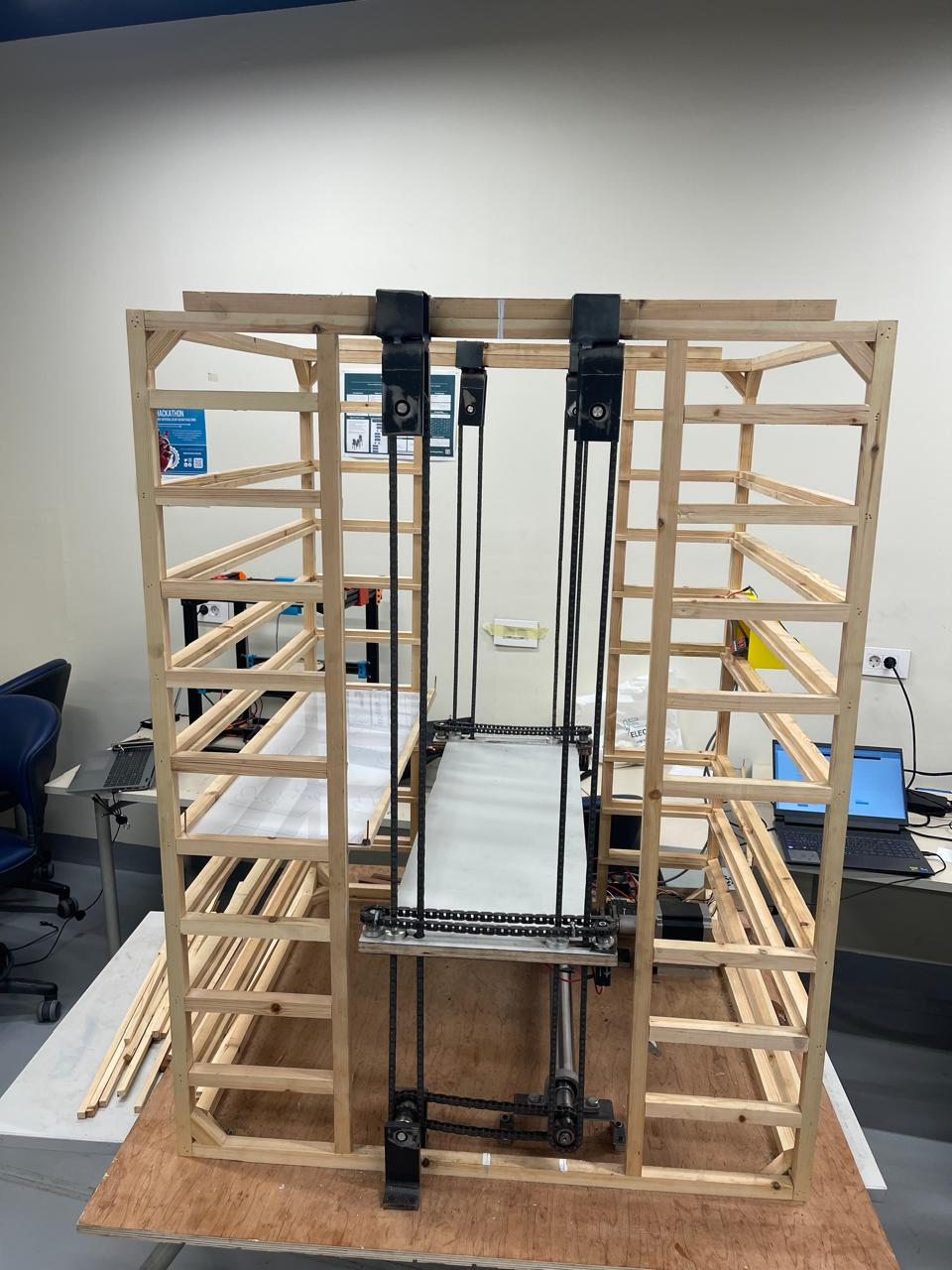
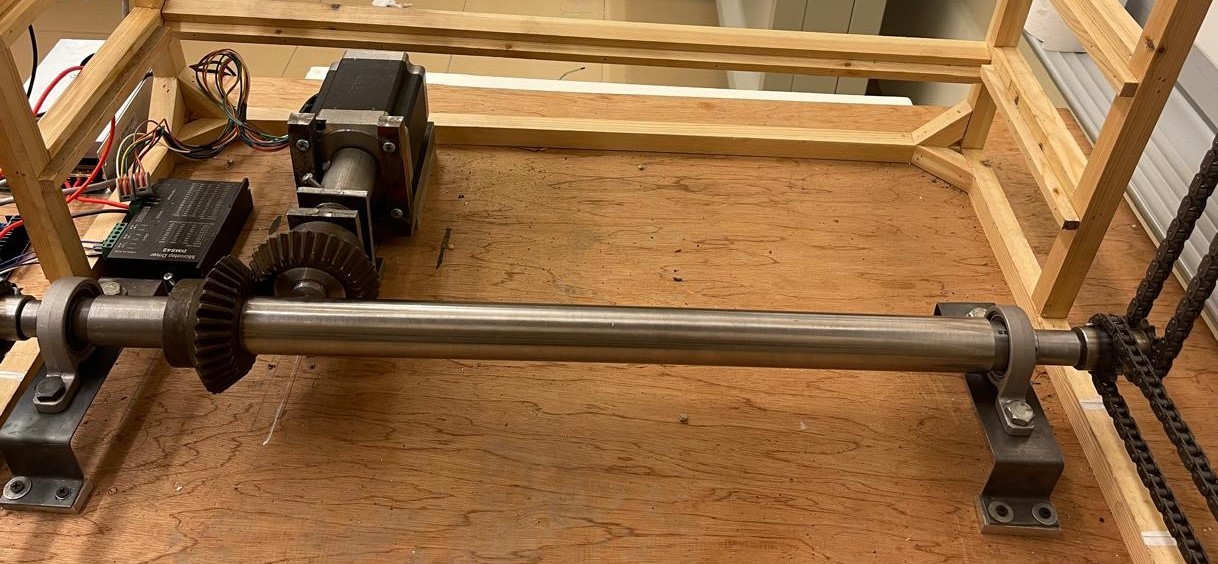
To ensure platform stability and avoid tilting under asymmetrical loads, a four-chain drive system was engineered. The platform is suspended from all four corners, transmitting torque from a single primary drive shaft through bevel gear sets to achieve synchronized vertical transit.
 🔍 Click to expand
 🔍 Click to expand
 🔍 Click to expand
 🔍 Click to expand
 🔍 Click to expand
Horizontal Extraction Subsystem
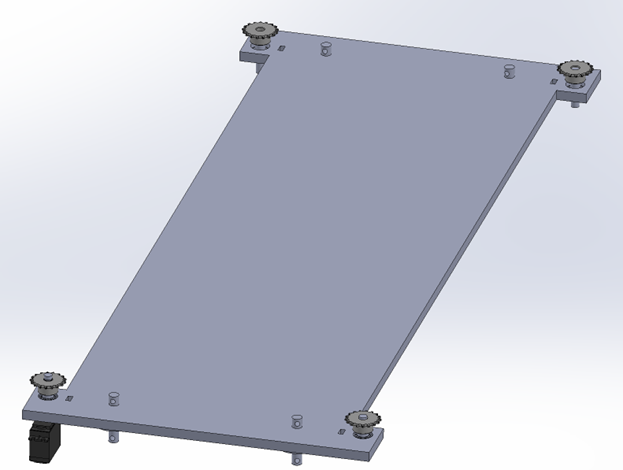
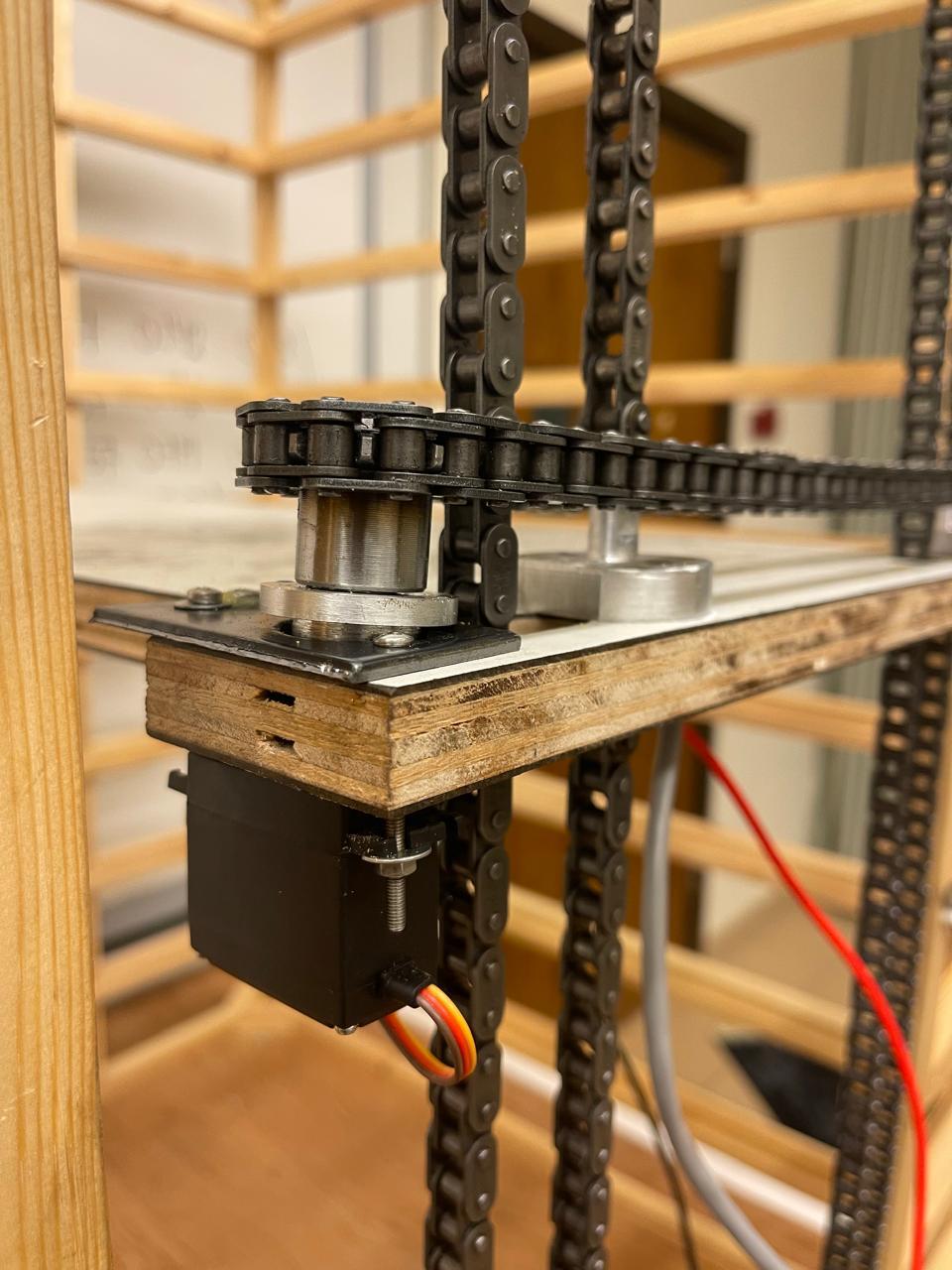
The lift carriage incorporates a specialized horizontal drawer extraction mechanism. Powered by dual MG996R servo motors and horizontal roller chains, the extraction unit engages shelf pins to smoothly transfer trays between the storage racks and the vertical lift platform.
 🔍 Click to expand
🔍 Click to expand
🔍 Click to expand
Material Strategy
To meet budget and fabrication constraints during the prototyping stage, a hybrid material configuration was utilized:
- Main Frame: Pine Wood, chosen for structural versatility and rapid fabrication.
- Primary Drive Shafts: Steel ST37, providing high torsional strength under heavy lifting conditions.
- Bearing Holders & Connectors: Aluminum 6061-T6, offering an optimal strength-to-weight ratio for weight-sensitive moving parts.
- Storage Trays: 3 mm Acrylic reinforced with structural wooden rods to prevent deflection.
Embedded Systems & Software Integration
Embedded Control & Feedback Loop
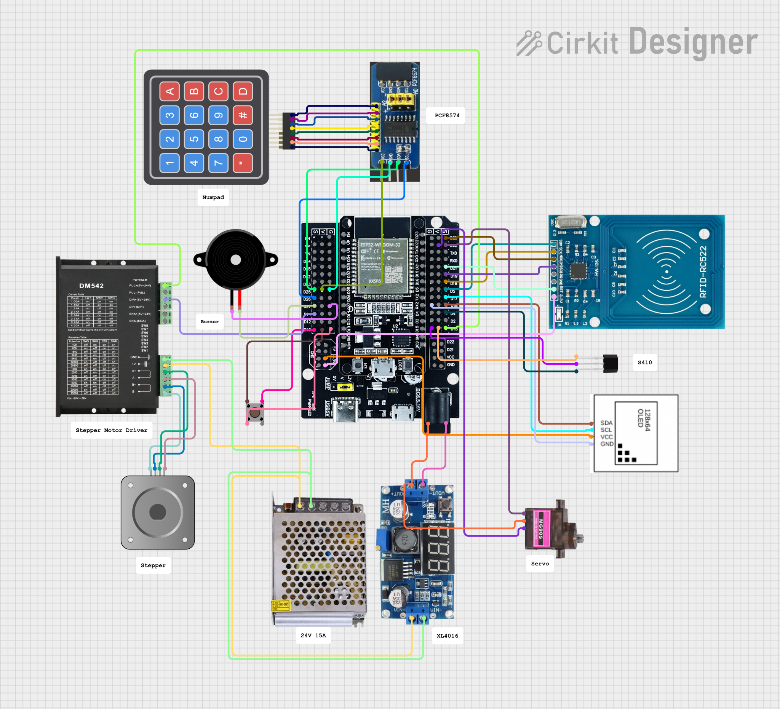
Vertical motion is powered by a high-torque NEMA 34 stepper motor managed by a DM542 driver. To eliminate cumulative step loss errors over extended operating cycles, a hardware feedback loop utilizing SS49E Hall Effect sensors and neodymium magnets was implemented at each floor level. The sensor triggers a hardware-level interrupt on the ESP32 microcontroller to stop the lift precisely aligned with the shelf guides.
 🔍 Click to expand
 🔍 Click to expand
System Logic & Architecture
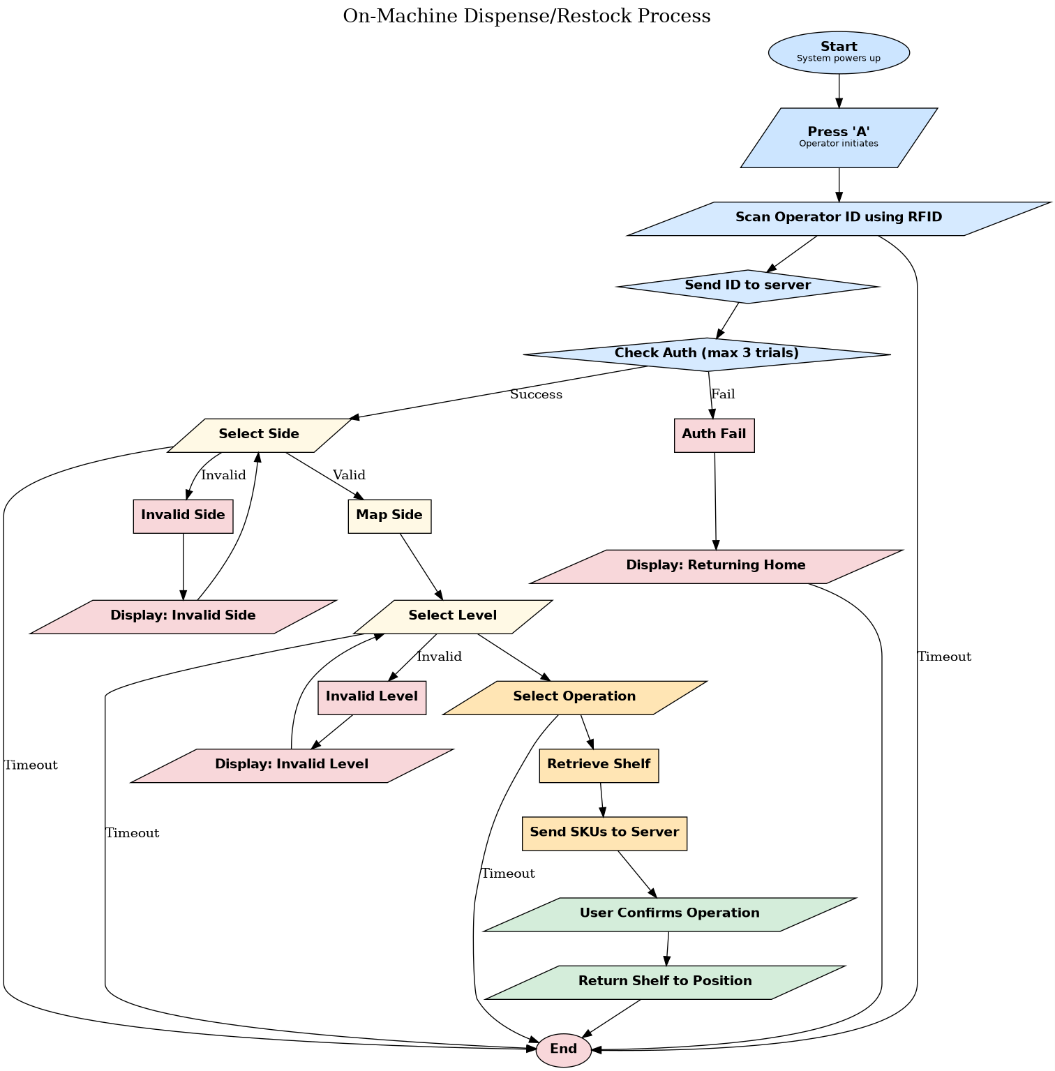
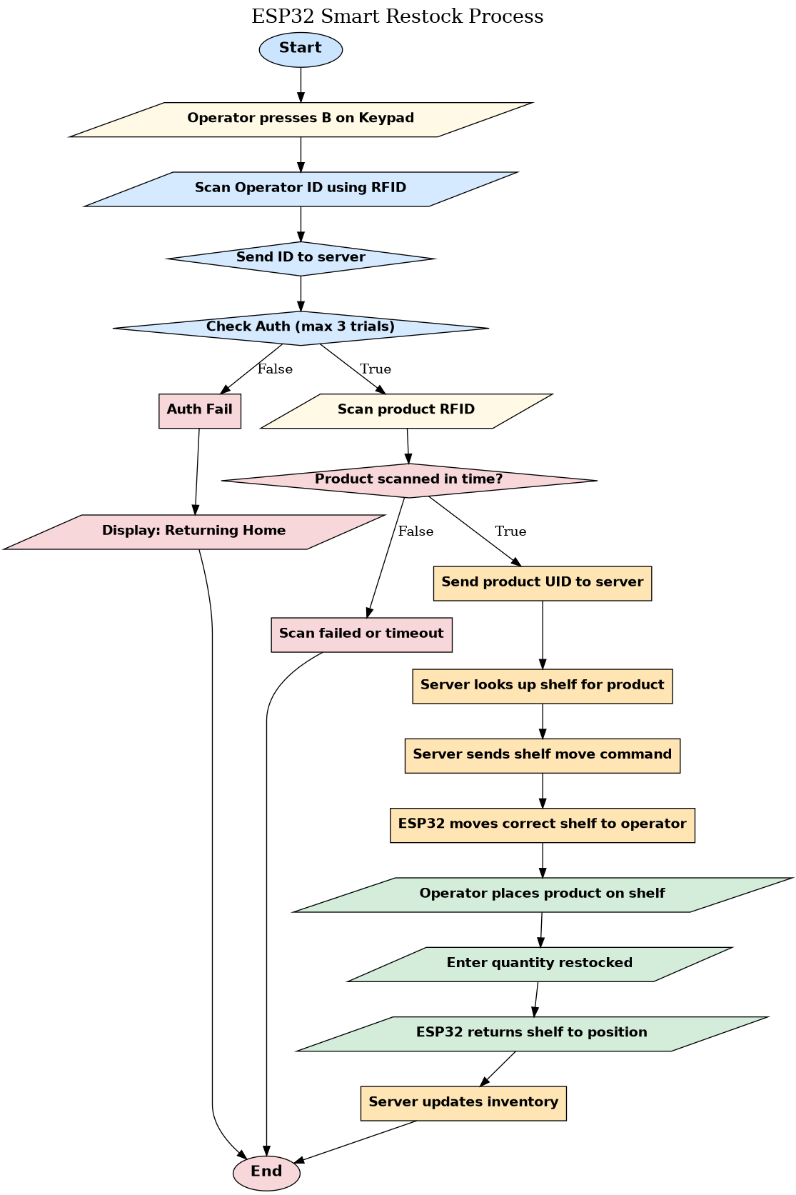
System control is bifurcated between local machine hardware and a remote management server running Python and Flask:
- Communication Layer: Real-time bi-directional messaging between the ESP32 and backend server via WebSocket protocols (JSON formatted payloads).
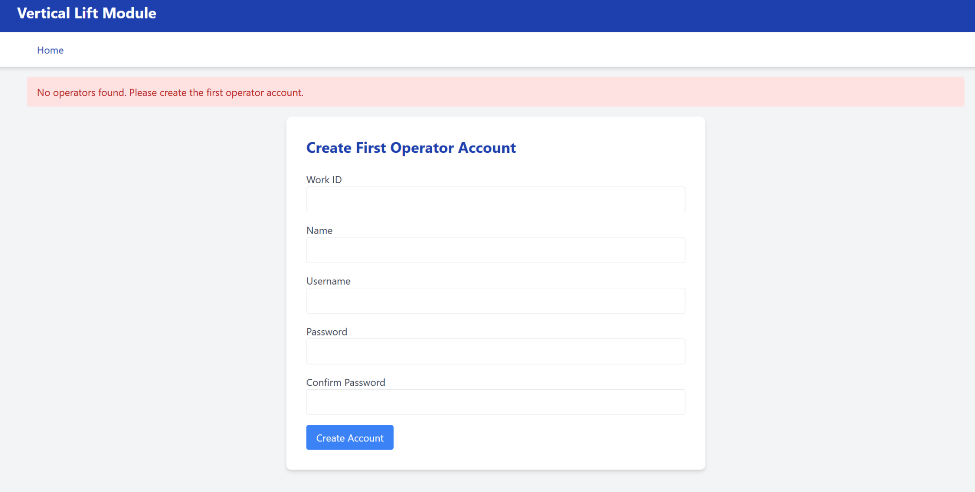
- RFID Identification: An RC522 reader enables operator authentication and instantaneous identification of unpackaged items.
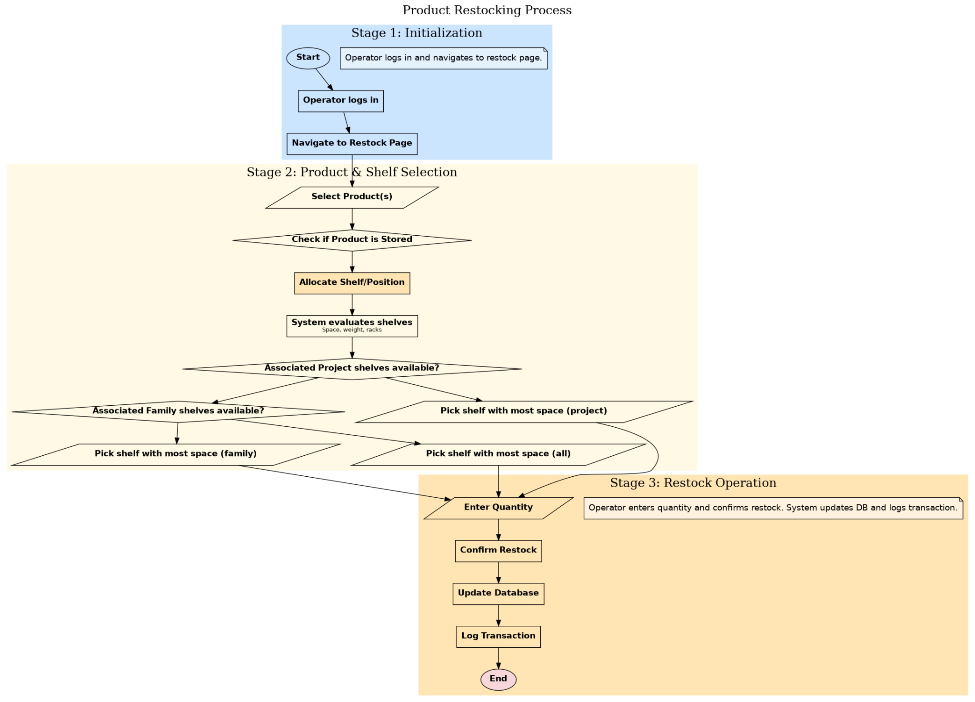
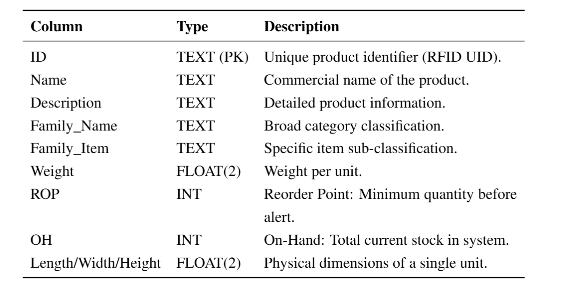
- Database Schema: An SQLite relational database tracks
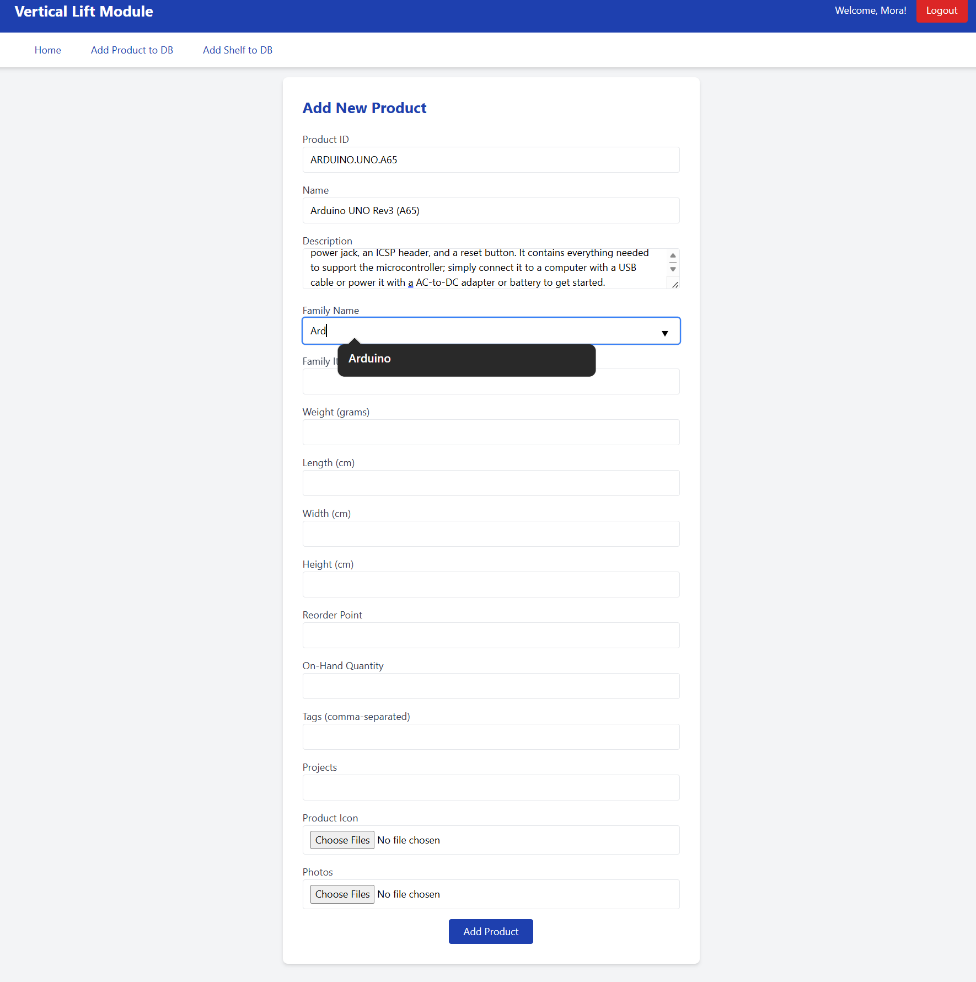
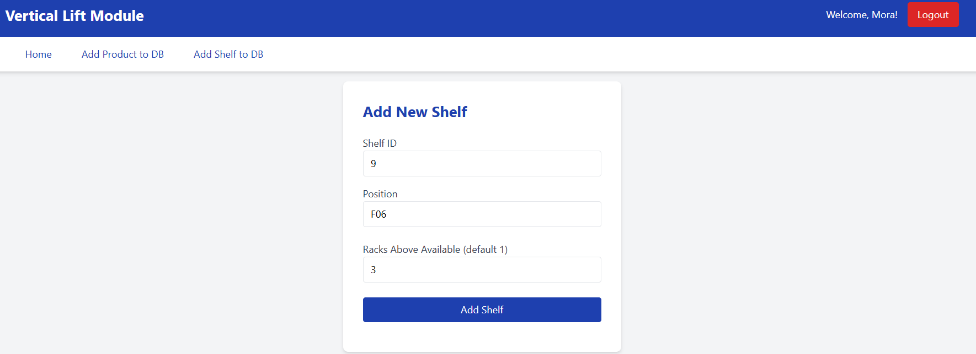
SHELVES,PRODUCTS,OPERATORS, andTRANSACTIONS, calculating Reorder Points (ROP) and On-Hand (OH) inventory levels.
 🔍 Click to expand
 🔍 Click to expand
 🔍 Click to expand
 🔍 Click to expand
Web Control & Machine Interface
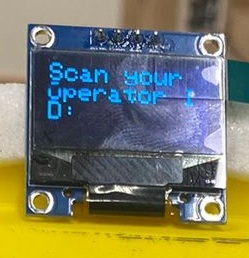
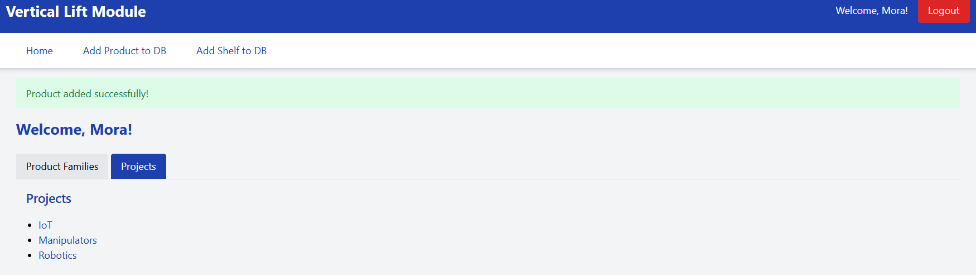
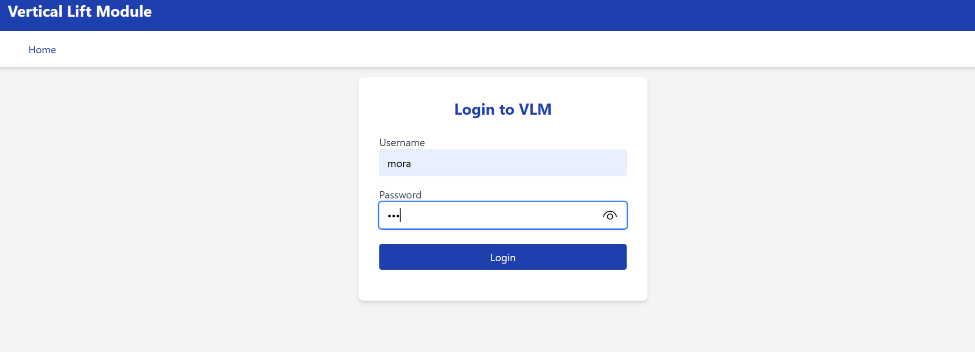
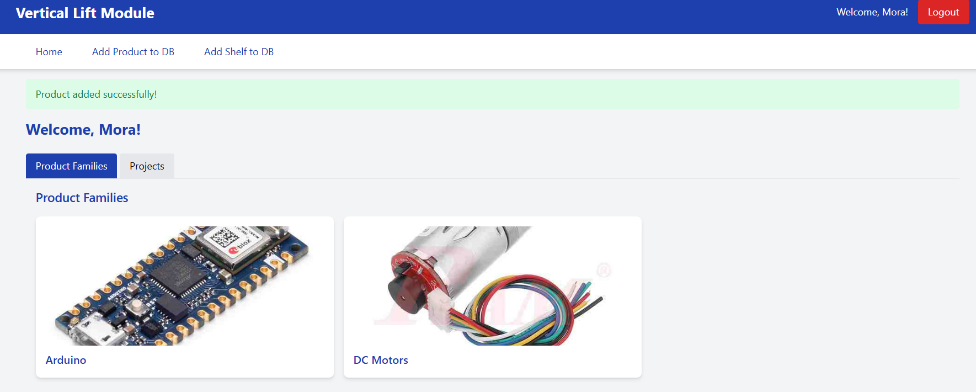
Operators interact with the VLM locally via a 4x4 keypad and an OLED screen, or remotely through a Flask web application. The web dashboard grants access control, stock analytics, manual tray movement commands, and order dispensing.
 🔍 Click to expand
 🔍 Click to expand
 🔍 Click to expand
 🔍 Click to expand
 🔍 Click to expand
 🔍 Click to expand
 🔍 Click to expand
 🔍 Click to expand
Dynamic Optimization via K-Means Clustering
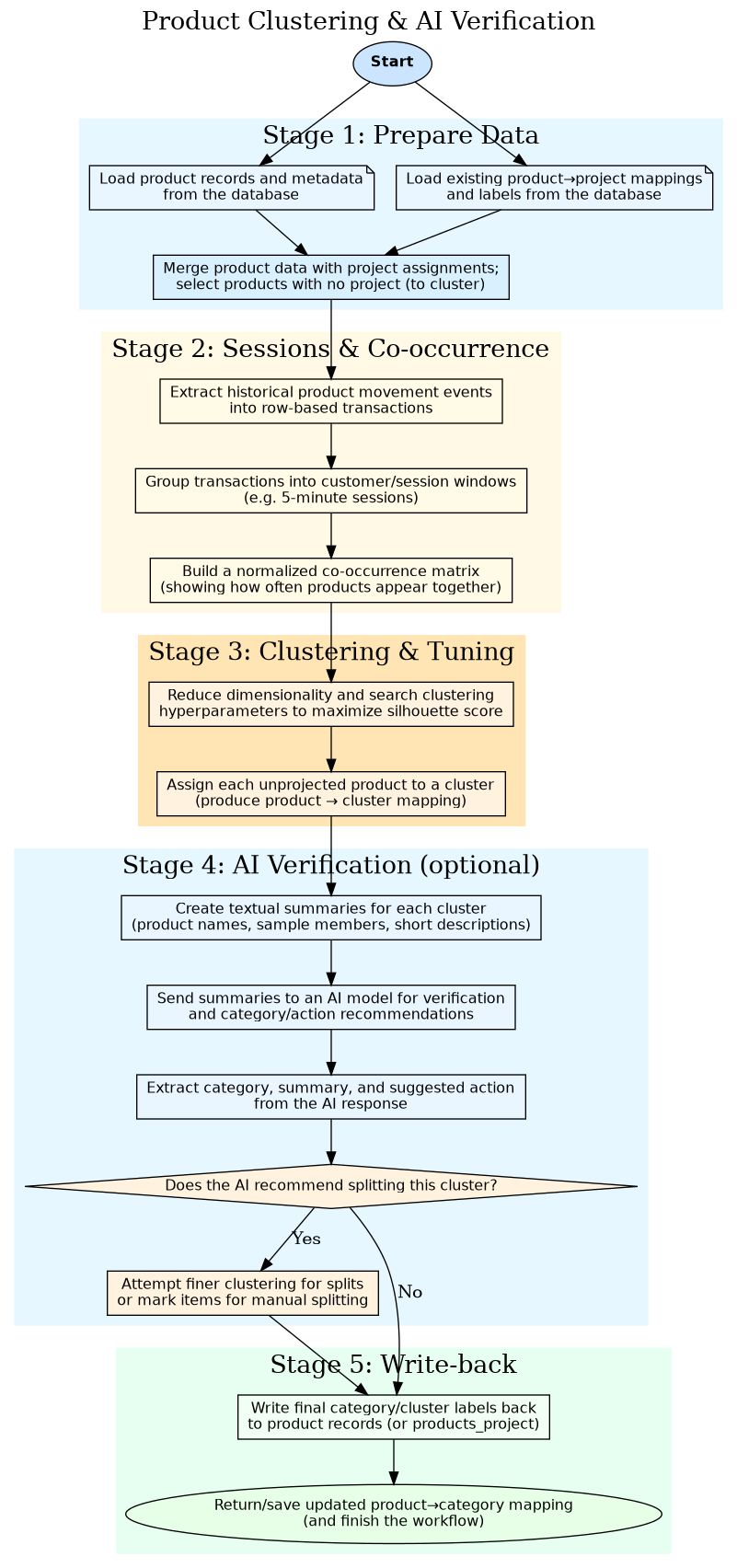
To minimize elevator travel times, historical transaction data is evaluated using K-means clustering. Products frequently requested within the same project order are grouped on adjacent shelves, dynamically reorganizing tray positions based on operational demand.
Operational Workflows & Validation
Dual-Cycle Efficiency
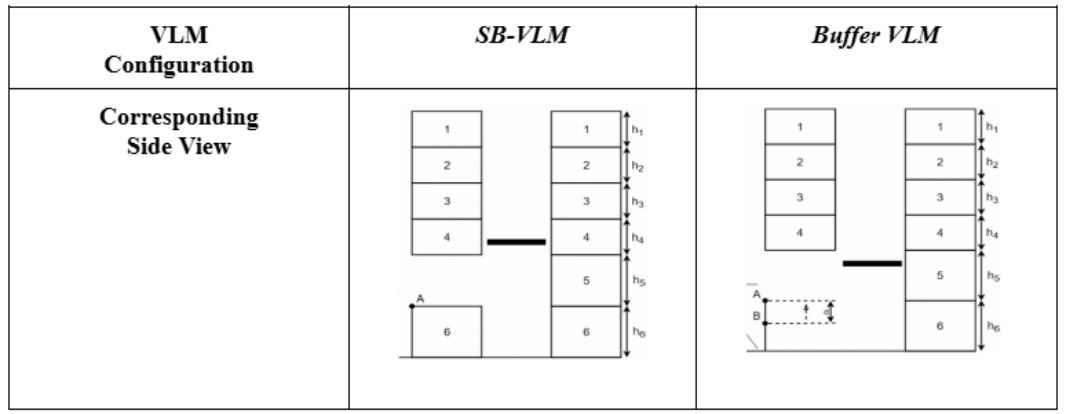
Unlike traditional single-cycle systems that return empty after retrieving an item, the VLM incorporates dual-cycle operation. By utilizing a secondary buffer tray, the lift carriage retrieves a requested item while simultaneously returning a restocked tray in a single vertical trip, cutting elevator transit time significantly.
Results & Economic Feasibility
Validation testing verified that closed-loop Hall Effect positioning eliminated vertical alignment errors across repeated cycles. Integrating RFID tags prevented manual logging discrepancies, securing 100% data integrity across database transactions.
A formal industrial-scale Benefit-Cost Analysis (BCA) yielded the following financial projection:
- Total Estimated System Investment: 5,065,000 EGP (including equipment, RFID infrastructure, and WMS software).
- Annual Savings: 6,672,500 EGP (derived from labor reduction, error minimization, and an 85% reduction in floor footprint).
- Benefit-Cost Ratio (BCR): 1.32
- Payback Period: Approximately 9 months (0.76 years).
Lessons Learned
- Positioning Feedback: Relying solely on open-loop stepper pulse counts introduced cumulative position drift over multi-floor travel cycles. While integrating Hall Effect sensors resolved floor alignment, adding incremental quadrature encoders directly to the drive shaft would offer higher resolution and velocity control.
- Prototyping Materials: Wood was suitable for rapid physical prototyping and load testing, but an industrial-grade deployment requires extruded aluminum or structural steel to ensure long-term dimensional stability and fire compliance.